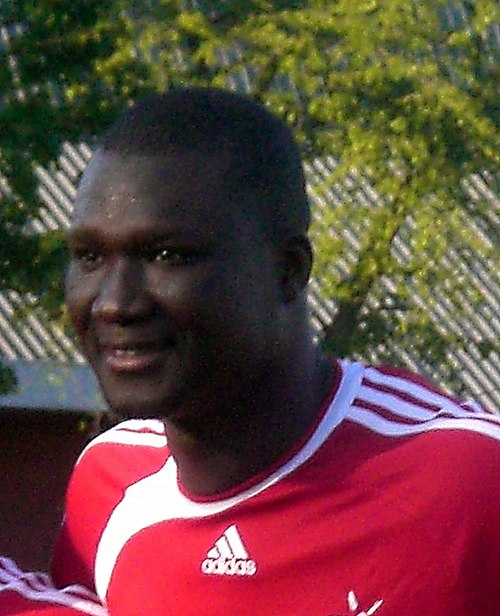
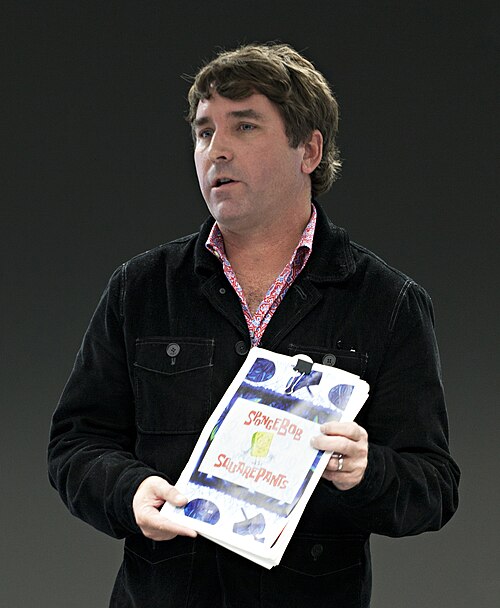
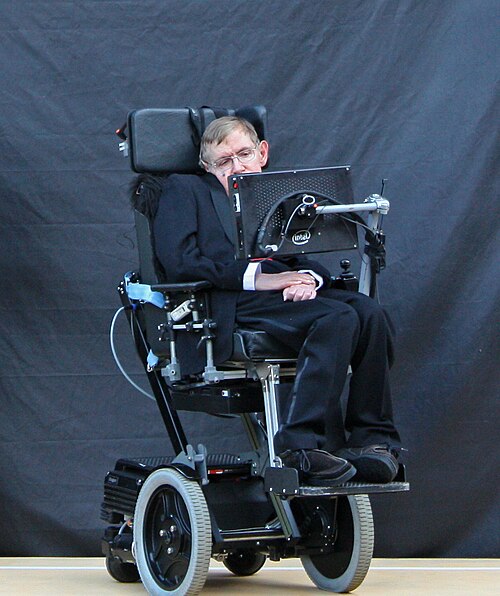
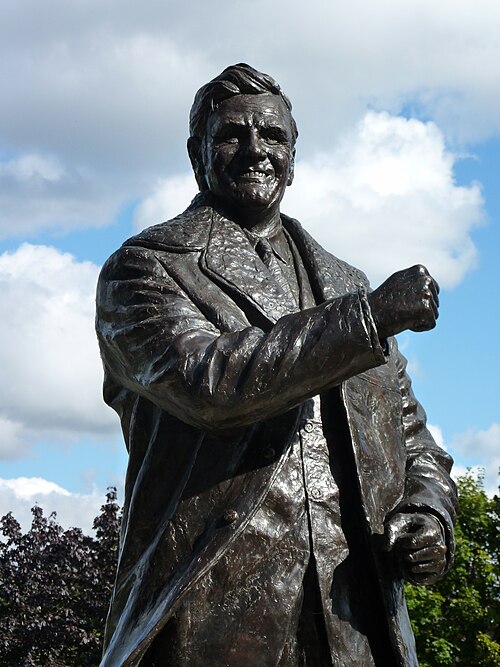
Amyotrophic lateral sclerosis, or ALS, is a disease that destroys the nerve cells that control the muscles a person moves at will, until walking, speaking, swallowing and finally breathing fail. In the US it is often called Lou Gehrig's disease. It is rare: MedlinePlus says about 5,000 people in the United States are diagnosed each year, and the CDC counted 16,583 people living with it in 2015, or 5.2 per 100,000. Most patients die within 2 to 5 years of diagnosis.
That speed shows in the list above. The median age at death is 65, with half dying between 57 and 72, far younger than for Alzheimer's or Parkinson's, where the typical famous patient lived into their 80s. Every person on the list is a man. ALS is more common in men, but the CDC puts the ratio at about 1.6 men for every woman, so an all-male list says more about who made the record than about the disease.
This article is shorter on advice than others in the series, for an honest reason. For most people with ALS, the cause is unknown, and researchers have found very few risk factors that a person could change.
What is ALS?
ALS attacks motor neurons, the nerve cells in the brain and spinal cord that carry signals to the voluntary muscles. As those cells die, the muscles they serve weaken and waste. Early on, a person may have trouble walking or running, writing, or speaking clearly. Eventually the chest muscles stop working, and most people with ALS die of respiratory failure, according to MedlinePlus.
ALS is the most common form of a wider group the NHS calls motor neurone disease, or MND. The NHS describes MND as causing muscle weakness that gets worse over a few months or years, and as usually life-shortening. There is no cure. The CDC notes that available drugs, riluzole and edaravone, slow progression in some patients, and that current treatments extend life by an average of a few months.
The course varies a great deal. MedlinePlus says most people die 2 to 10 years after symptoms first appear, but some live far longer.
Familial or sporadic: two kinds of ALS
Doctors split ALS into two groups, and the difference matters for anyone with a relative who had it.
Sporadic ALS is the large majority, about 90 to 95 percent of cases. It strikes people with no known family history, and the CDC says its cause is unknown. It usually begins in the late fifties or early sixties.
Familial ALS makes up an estimated 5 to 10 percent and tends to start earlier, typically in the late forties or early fifties. The NHS puts it more simply: about 1 in 10 people with MND have a family history of it, and a relative with MND does not mean a person will get it too.
Several genes are known. In the US and Europe, changes in a gene called C9orf72 explain 30 to 40 percent of familial ALS, and changes in SOD1 account for 15 to 20 percent of familial cases worldwide. TARDBP and FUS each explain about 5 percent. In all, an identified mutation is found in about 60 percent of familial cases. Most familial ALS is passed on in a dominant pattern, so one altered copy can be enough, though not everyone who carries one becomes ill.
Which risk factors can't be changed?
Age
MedlinePlus says ALS usually begins between 40 and 60, and the NHS says MND usually affects people over 50. Among Americans already living with it, the CDC found the highest rate in those aged 70 to 79, at 20.2 per 100,000, and the lowest in adults 18 to 39, at 0.5 per 100,000.
Sex
Men are more often affected. The CDC's registry data give a prevalence of 6.4 per 100,000 in men and 4.0 in women. Why is not known.
Race and ethnicity
In the CDC's 2015 count, prevalence was 5.4 per 100,000 among white Americans and 2.3 among Black Americans. The agency lists white race, male sex, non-Hispanic ethnicity, age over 60 and a family history as the characteristics of people more likely to develop ALS. Some of that gap may reflect who gets diagnosed and counted.
Family history and genes
As above, a family history is the clearest single marker of higher risk, but it applies to only a small share of patients.
Are there risk factors that can be changed?
Very few, and none is established. The CDC says sporadic ALS might be linked to environmental factors, but that more research is needed into its cause. What follows are the leads with the most study behind them. All of the evidence is observational, and the effects that have been found are modest.
Military service
This is the most discussed link. The CDC reports that veterans, particularly men, have a higher risk than people who did not serve, and that US troops deployed to the 1991 Gulf War were twice as likely to develop ALS as those who served at the same time elsewhere. A 2020 systematic review in Acta Neurologica Scandinavica cites a pooled odds ratio for military service of 1.29, but notes that three later studies found no association and that many exposures in this research were self-reported. No single military exposure has been pinned down as a cause. The review notes that the US Department of Veterans Affairs decided to compensate Gulf War veterans who develop ALS, a policy choice rather than a scientific verdict.
Head injury and contact sport
A 2023 meta-analysis of 36 observational studies in Frontiers in Neuroscience found head trauma linked to a modest rise in odds, an odds ratio of 1.26. Professional football has drawn the most attention. A 2021 study in JAMA Network Open of 19,423 former NFL players found ALS about 3.6 times more common than expected, and players with ALS had longer careers on average, 7.0 years against 4.5 for matched players. The authors describe an association, not a proven cause, and note the study had no data on head impacts outside the NFL or on genetics. The CDC describes the football link as purported and still unresolved.
Pesticides, lead and other chemicals
The CDC says sporadic ALS might be linked to chemical exposures such as heavy metals and pesticides. In the 2023 meta-analysis, pesticide exposure carried an odds ratio of 1.96 and lead 2.31, while a broader heavy-metals category was not significant. A 2018 review of occupational studies put the risk for occupational pesticide exposure at 1.35 times and for metal exposure at 1.45 times, and found raised risk for electrical work and electromagnetic fields too, at 1.18. These are small effects from mixed, often self-reported data.
Smoking
The picture is unsettled. A 2024 meta-analysis of 32 studies in Tobacco Induced Diseases found current smokers had an adjusted odds ratio of 1.28, with the link clearer in women, but the authors rated the certainty of the evidence as low and said it does not prove cause. The 2023 meta-analysis, using a different set of studies, found smoking not significant. Smoking is harmful for many other reasons, but on current evidence quitting cannot be promised to change ALS risk.
Strenuous exercise
The 2023 meta-analysis found vigorous physical activity linked to a very small rise in odds, 1.06. The 2018 occupational review found a much larger figure for professional sport, 3.98, though it is hard to separate exercise itself from head knocks and other exposures that come with the job.
What this adds up to
Put together, the findings point to a few exposures, chiefly pesticides, lead, head injury and some military settings, that may nudge risk upward. None explains most cases, none is proven to cause the disease, and for sporadic ALS, whose cause the CDC calls unknown, no specific step is known to lower the risk.
What does not cause ALS, and what is myth?
"It always runs in families"
The reverse is true. Nine in ten cases or more are sporadic, with no family history, and the NHS stresses that having an affected relative does not mean a person will also get it.
"Playing sport gives you ALS"
Elite contact sport is associated with higher risk in some studies, but the association is not proven to be causal, and for ordinary exercise the link found in pooled data is very small.
"Gulf War service causes ALS"
Deployment was linked to roughly double the risk in some studies, but the reason is unknown, and other cohorts found no significant increase.
Can it be caught early?
No screening test exists for ALS in people without symptoms. Diagnosis is made by a specialist once symptoms appear.
When should someone see a doctor?
The NHS lists early signs of MND as stiff or weak hands, weak legs and feet, and twitches, spasms or cramps. It advises seeing a GP for:
- Difficulty holding or gripping things
- Weakness in the legs or feet
- Twitches or cramps that keep happening, last a long time or do not go away
What do the famous cases show?
- Stephen Hawking, the Cambridge physicist, died in 2018 at 76. He lived for decades with an unusually slow-progressing form of the disease, a rare exception to the usual course.
- Sam Shepard, the Pulitzer Prize-winning playwright and actor, died in 2017 at 73 of complications of ALS.
- Stephen Hillenburg, the creator of SpongeBob SquarePants, died in 2018 at 57.
- Eric Dane, Dr. Mark Sloan on Grey's Anatomy, died in 2026 at 53 of respiratory failure from ALS.
- Dwight Clark, the San Francisco 49ers receiver, died in 2018 at 61.
Across the notable people on this list, the median age at death is 65. That is about 18 years younger than for Alzheimer's or Parkinson's, which matches a disease that often begins in middle age and moves fast. The standard caveats apply: famous people are not a representative sample, causes of death here are recorded from Wikidata and can be incomplete, and older deaths from ALS may have gone unrecorded or been put down to something else.
The short version
ALS is rare, fast and, for most patients, unexplained. Age, male sex and a family history are the clearest markers of risk, and only 5 to 10 percent of cases are familial. The leads on factors that can change, such as pesticides, lead, head injury and military service, are consistent enough to keep studying but small and unproven. For most people, there is no known step that lowers the risk. The NHS advises seeing a GP for trouble gripping, weakness in the legs or feet, or twitches and cramps that keep coming back.
Sources
- MedlinePlus Genetics: Amyotrophic lateral sclerosis - incidence, familial and sporadic shares, ages of onset, genes, survival range.
- MedlinePlus: Amyotrophic lateral sclerosis - what ALS is, typical age, symptoms, respiratory failure.
- NHS: Motor neurone disease - ALS as the main type, age, family history, early signs, when to see a GP.
- CDC MMWR: Prevalence of amyotrophic lateral sclerosis, United States, 2015 - case count, rates by sex, age and race, survival, treatments.
- CDC MMWR: Grand Rounds, National ALS Registry - unknown cause of sporadic ALS, military and Gulf War findings, chemicals, football.
- Frontiers in Neuroscience (2023): Risk factors associated with ALS, meta-analysis - pooled odds for head trauma, pesticides, lead, military service, exercise, smoking.
- Tobacco Induced Diseases (2024): Smoking and ALS, meta-analysis - pooled odds for current smoking, low certainty.
- Acta Neurologica Scandinavica (2020): Military service and related risk factors for ALS - military evidence, its limits, VA compensation policy.
- International Journal of Environmental Research and Public Health (2018): ALS and occupational exposures, meta-analyses - agricultural, metal, electrical and sport exposures.
- JAMA Network Open (2021): Incidence of and mortality from ALS in NFL athletes - raised ALS rates in former players, association with career length.
How this was sourced
This article summarizes public health authorities and peer-reviewed research, linked at each claim. Details about the people named come from our records, which draw on Wikidata. It is not medical advice: talk to a doctor about your own risk.