Laryngeal cancer is cancer of the larynx, the voice box that sits at the top of the windpipe and holds the vocal cords. It is one of the cancers people loosely call "throat cancer," and in the US it is fairly uncommon: the American Cancer Society expects about 12,290 new cases and about 3,960 deaths in 2026.
It is also a cancer that is shrinking. The ACS says new cases are falling about 2% to 3% a year, mainly because fewer people smoke. When it is found early it is often curable: the National Cancer Institute's SEER program reports five-year relative survival of 79.8% for cancer still confined to the larynx.
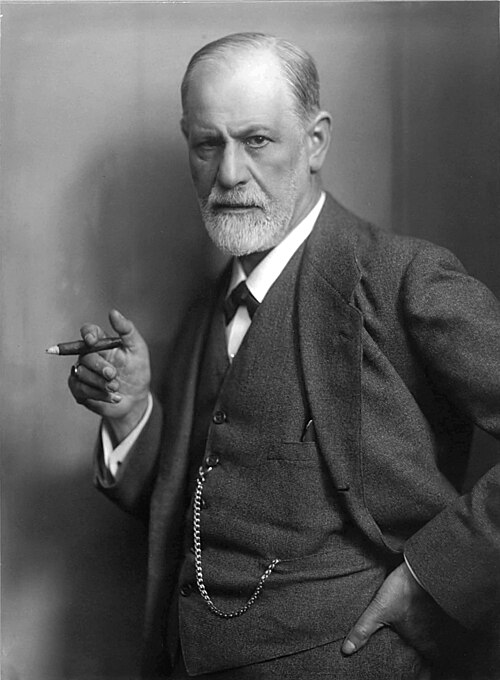
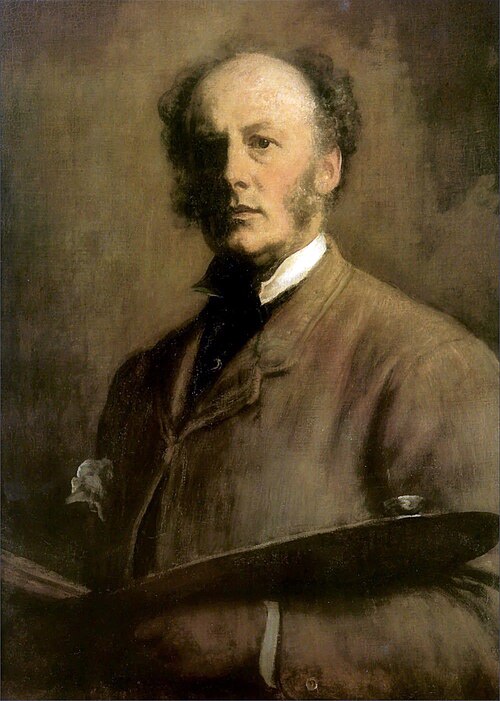
Every notable person on the list above is a man, and most died in the 20th century. Both facts fit what is known about the disease. The ACS says laryngeal cancers are about 5 times more common in men than in women, probably because in the past men were more likely to smoke and drink heavily.
What is laryngeal cancer?
The larynx has three parts: the area above the vocal cords (supraglottis), the vocal cords themselves (glottis) and the area just below them (subglottis), as the NCI's treatment summary describes. The NCI says most laryngeal cancers are squamous cell carcinomas, which start in the thin, flat cells lining the inside of the voice box.
Where the tumor starts shapes how early it is noticed. A growth on a vocal cord changes the voice quickly, and the NCI notes that early vocal cord cancers are usually found because of hoarseness. Tumors above the cords more often show up as a sore throat, pain on swallowing, ear pain or a lump in the neck. For small cancers that have not spread to lymph nodes, the NCI gives cure rates of 75% to 95%, depending on where the tumor is and how deep it goes.
The larynx sits right next to the oropharynx, the part of the throat behind the mouth that includes the tonsils and the base of the tongue. The two are often lumped together as throat cancer, but their causes are not identical, which matters most for HPV, covered below.
Which risk factors can't be changed?
Age
Laryngeal cancer builds over many years, so it is rare in young people. The ACS says more than half of cases are found in people 65 or older, and puts the average age at diagnosis at about 66. SEER gives a median age at diagnosis of 67 and at death of 70.
Sex
Men are far more affected. The ACS puts lifetime risk at about 1 in 200 for men and 1 in 840 for women. The NHS lists being male, especially being a Black man, among the factors that raise risk.
Family history and inherited conditions
The NHS counts having a parent, brother, sister or child who has had laryngeal cancer as a risk factor. The ACS says inherited gene changes may play a role in some cases, but this is not common. Two rare inherited conditions stand out: people with Fanconi anemia have a very high risk of throat cancers including laryngeal cancer, and people with dyskeratosis congenita face a very high risk of head and neck cancers at a young age.
Past radiation and reflux
The NHS also lists acid reflux and earlier radiotherapy to the neck as factors that raise risk.
Which risk factors can be changed?
Smoking: the main cause
Tobacco is the dominant factor. The NCI says that most squamous cell cancers of the mouth and voice box are caused by tobacco and alcohol use, and the CDC lists the voice box among the cancers that smoking causes. Cigars and pipes are not a way around it: the ACS says smoke from cigarettes, pipes and cigars all raises the risk of head and neck cancer.
Quitting
Stopping smoking pays off steadily over time. The CDC says that 5 to 10 years after quitting, the added risk of cancers of the larynx, mouth and throat drops by half, and that by 20 years, the risk of laryngeal cancer falls to close to that of someone who never smoked. The NCI notes that the risk falls after quitting but stays above that of people who never smoked.
Alcohol
Alcohol on its own raises risk, though less for the larynx than for some neighboring sites. The NCI reports that heavy drinkers are about 2.6 times as likely to develop cancer of the voice box as people who do not drink, compared with about 5 times for the mouth and throat. It defines heavy drinking for men as 5 or more drinks on any day or 15 or more a week, and for women as 4 or more a day or 8 or more a week. The NHS advises no more than 14 units a week.
Smoking and drinking together
The real danger is the combination. The ACS says that smoking and drinking together multiplies the risk of head and neck cancers, and that heavy smokers who also drink heavily have roughly 30 times the risk of people who do neither. The NCI's alcohol fact sheet likewise describes the risk for people who use both as much greater than for people who use only one.
Workplace exposures
Asbestos is the workplace exposure IARC has classified as a cause, though the evidence is debated. The NCI reports that the International Agency for Research on Cancer has found sufficient evidence that asbestos causes cancers of the lung, larynx and ovary. Other reviews are less certain: the NCI's head and neck fact sheet calls the added risk from asbestos and synthetic fibers controversial, and the ACS notes that not all studies agree on the link.
Other exposures are less certain. The ACS says long and intense exposure to wood dust, paint fumes and certain chemicals can raise risk, and the NCI notes that workers in construction, metal, textile, ceramic, logging and food industries may have an increased risk of cancer of the voice box.
Diet
The ACS says a diet low in fruit and vegetables is linked with a higher risk of laryngeal cancer. This is a smaller and less certain effect than tobacco or alcohol.
Does HPV cause laryngeal cancer?
This is where the voice box and the throat behind the mouth part ways, and where a lot of popular coverage blurs the line.
For the oropharynx, the answer is clearly yes. The NCI says about three-quarters of oropharyngeal cancers are caused by chronic HPV infection. The CDC describes HPV as a virus that can cause cancer of the cervix or in the back of the throat.
For the larynx, the evidence does not support HPV as a major cause. The NCI's head and neck fact sheet says HPV can be found in other head and neck cancers, but appears to cause cancer only in the oropharynx. A 2017 study in JAMA Oncology of 863 head and neck cancers found that 60% of oropharyngeal cancers were p16 positive, a common marker of HPV, compared with 13% of laryngeal cancers, and that only 5% of laryngeal tumors tested positive with a more specific HPV test. The authors concluded that few cancers outside the oropharynx were HPV related, and that the p16 marker alone is a poor stand-in for HPV in those cancers.
Neither the ACS nor the NHS lists HPV among the risk factors on its laryngeal cancer pages. So for the voice box, tobacco and alcohol remain the story. The HPV vaccine still matters for throat cancer more broadly: the NCI notes that avoiding oral HPV infection can reduce the risk of HPV-associated head and neck cancers, and that an HPV vaccine has accelerated FDA approval for preventing HPV-caused oropharyngeal cancers in people aged 9 to 45.
What does not cause laryngeal cancer?
"Throat cancer is mostly an HPV disease now"
That is true of oropharyngeal cancer, not of laryngeal cancer, as the section above shows. The NCI says HPV appears to cause cancer only in the oropharynx, and that most cancers of the voice box are caused by tobacco and alcohol.
"Once you've smoked, the damage is done"
The CDC's figures on quitting say otherwise: the added risk drops by half within 5 to 10 years of stopping.
Can it be caught early?
There is no screening test for laryngeal cancer in people without symptoms. The NCI says there is no standard screening test for head and neck cancers. Early detection depends on acting on symptoms, and the larynx has an advantage here: a tumor on the vocal cords tends to change the voice early, when it is most treatable. SEER data show that 49% of laryngeal cancers are found while still localized, a far better share than for many cancers.
What are the warning signs?
The NHS advises seeing a GP for:
- A hoarse voice or change in the voice that does not go away.
- A lump or swelling in the neck, or one that is growing.
- Pain or difficulty when swallowing.
- Less often, an earache that does not go away, bad breath or weight loss without trying.
These symptoms are common and usually have other causes, but a lasting change is worth checking. Trouble breathing is more urgent: the NHS says to call 111 if breathing is harder than usual, and to call 999 if someone is gasping, choking or unable to speak. For anyone gasping, choking or unable to speak: call 911 (US), 999 (UK) or 112 (EU) at once.
What do the famous cases show?
The clearest case on the list is the crime novelist Evan Hunter, who wrote the 87th Precinct series as Ed McBain. His Wikipedia biography says he died of laryngeal cancer in 2005, at 78.
Robert Oppenheimer, the physicist, was diagnosed with throat cancer in late 1965 and died in 1967 at 62; his biography does not say which part of the throat was affected, but does say the cancer was likely caused by chain smoking for much of his life. Edward VIII, by then the Duke of Windsor, was diagnosed with throat cancer in late 1971, received cobalt therapy and died in 1972 at 77.
Other names show how loose "throat cancer" can be. Our Wikidata-based record lists Sigmund Freud (died 1939, aged 83) here, but his Wikipedia biography describes a cancer of the mouth, and Carl Perkins, who was diagnosed with throat cancer, died in 1998 at 65 from complications of several minor strokes.
Across the notable people on this list, the median age at death is 65, with the middle half dying between about 55 and 78; the youngest was 47 and the oldest 83. All are men, and only two died after 2000. Notable people are not a representative sample, causes of death are recorded from Wikidata and can be loose, as the cases above show, and many of these deaths come from an era when heavy smoking was normal and treatment far weaker than today.
The short version
- Smoking is the main cause of laryngeal cancer; heavy drinking adds to it, and the two together multiply the risk.
- Quitting smoking halves the added risk within 5 to 10 years, according to the CDC.
- HPV drives most oropharyngeal cancers but, per the NCI and a large 2017 study, very few cancers of the voice box.
- IARC classifies asbestos as a cause of laryngeal cancer; other reviews are less certain.
- A hoarse voice or voice change that does not go away deserves a doctor's look; found early, most laryngeal cancers are treatable.
Sources
- American Cancer Society: Key statistics for laryngeal and hypopharyngeal cancers - US cases, deaths, lifetime risk, falling rates.
- American Cancer Society: Risk factors for laryngeal and hypopharyngeal cancers - tobacco, alcohol, sex, workplace, inherited syndromes.
- National Cancer Institute SEER: Cancer stat facts, laryngeal cancer - survival by stage, median ages.
- National Cancer Institute: Laryngeal cancer treatment (PDQ) - anatomy, cell type, hoarseness, cure rates.
- National Cancer Institute: Head and neck cancers fact sheet - tobacco and alcohol, HPV and the oropharynx, workplace, screening.
- National Cancer Institute: Alcohol and cancer risk - relative risks for the larynx.
- National Cancer Institute: Asbestos exposure and cancer risk - IARC finding on the larynx.
- JAMA Oncology (2017): HPV prevalence in head and neck cancers by site - HPV markers in larynx vs oropharynx.
- CDC: Cigarette smoking and cancer - smoking causes larynx cancer; risk after quitting.
- CDC: HPV and cancer - HPV and cancers of the back of the throat.
- NHS: Laryngeal cancer causes - risk factors and alcohol advice.
- NHS: Laryngeal cancer symptoms - symptoms and when to get help.
How this was sourced
We summarized public health authorities and peer-reviewed research, linked at each claim, and checked the named people against their published biographies. This page is not medical advice and does not replace a doctor. If you are worried about your own risk or a change in your voice, talk to a doctor about it.