Kidney cancer is a cancer that starts in the cells of one or both kidneys, the organs that filter blood and make urine. It is one of the more common cancers in the United States: the American Cancer Society expects about 80,450 new cases and about 15,160 deaths in 2026, and ranks it among the 10 most common cancers in both men and women.
The outlook is better than for many cancers, largely because so many are found early. The National Cancer Institute's SEER program puts overall five-year relative survival at 79.2%, and reports that about two-thirds of cases are diagnosed while the cancer is still confined to the kidney.
Every person on the list above is a man, and their median age at death was 67.5. Both points fit the wider pattern. The ACS says kidney cancer is about twice as common in men as in women, and SEER gives a median age of 65 at diagnosis and 73 at death. A list this short exaggerates the gap, but the direction is real.
What is kidney cancer?
Cancer begins when cells pick up DNA changes that let them grow out of control. In adults, the main type by far is renal cell carcinoma, which the American Cancer Society says makes up roughly 90% of kidney cancers; about 70% of those are the clear cell subtype, named for how pale the cells look under a microscope. A smaller group, transitional cell or urothelial carcinoma, begins in the lining of the renal pelvis, where urine collects, and accounts for about 5 to 10 of every 100 kidney cancers. Wilms tumor is a separate disease of young children; the National Kidney Foundation says it mostly affects children younger than 5.
Because the kidneys sit deep in the body, a tumor can grow for a long time unnoticed. The ACS notes these cancers can grow quite large without causing pain or other problems. Survival depends heavily on stage: SEER reports five-year relative survival of 93.6% for localized disease, 77.6% for regional spread and 20.3% once it has spread to distant organs.
Which risk factors can't be changed?
Age and sex
Kidney cancer is mainly a disease of later middle age. The American Cancer Society puts the average age at diagnosis at 65, with most cases found between 55 and 74 and few before 45. Lifetime risk is about 1 in 45 for men and 1 in 75 for women. The ACS suggests the higher rate in men may partly reflect higher smoking rates and more workplace chemical exposure.
Race and ethnicity
The ACS reports the highest rates among American Indian and Alaska Native people, and slightly higher rates in African American people than in White people, and says the reasons are not clear.
Family history and inherited syndromes
A strong family history raises risk, most of all when a brother or sister has had kidney cancer, according to the ACS; shared genes, shared surroundings or both may be responsible. A number of rare inherited syndromes carry a much higher risk, though they explain only a small share of cases. The ACS list includes von Hippel-Lindau disease, hereditary papillary renal carcinoma, Birt-Hogg-Dube syndrome, Cowden syndrome and tuberous sclerosis, among others. The CDC adds that sickle cell trait is linked to renal medullary carcinoma, a very rare form.
Advanced kidney disease
People with advanced chronic kidney disease face a higher risk, the ACS says, especially those who need dialysis. The NHS lists long-term dialysis as well as past radiotherapy aimed near the kidneys.
Which risk factors can be changed?
Unlike brain or bone cancer, kidney cancer has several known risk factors that people can act on. The American Cancer Society says there is no guaranteed way to prevent it, but names three levers: not smoking, keeping a healthy weight and avoiding certain workplace chemicals. The NHS, the CDC and the National Kidney Foundation give similar lists.
Smoking
Tobacco is a recognized cause. The CDC counts kidney and renal pelvis cancers among the cancers that the US Surgeon General has classified as caused by tobacco use, and its surveillance report places kidney cancer in a group of six tobacco-related cancers, with acute myeloid leukemia and esophageal, stomach, liver and cervical cancer, whose relative risks fall in a similar range of 1.5 to 2.5. The report gives no separate figure for kidney cancer.
The dose matters. The ACS says the added risk seems to depend on how much a person smokes, and that it falls slowly after quitting. The National Kidney Foundation notes that risk rises the longer and more heavily someone smokes.
Quitting appears to help even after a diagnosis. A study run by the WHO's International Agency for Research on Cancer followed 212 smokers newly diagnosed with renal cell carcinoma for an average of 8 years and found that those who quit had a lower risk of the cancer progressing and of dying. As an observational study, it shows an association, not proof.
Excess body weight
Carrying extra weight is linked to a higher risk of renal cell carcinoma. The National Cancer Institute lists kidney cancer as one of 13 cancers associated with obesity, and says that for most of those cancers, obesity is tied to anything from about a 10% increase in risk to a doubling. The NCI also points to a possible link: rising body weight among young adults has been associated with a rise in kidney cancer in that group. One proposed reason, per the ACS and the National Kidney Foundation, is that excess fat changes hormone levels in ways that may encourage tumors.
The ACS recommends keeping a healthy weight through regular physical activity and a healthy diet as one of its three prevention steps, and the NHS likewise advises losing weight for people who are overweight.
High blood pressure
The ACS says kidney cancer risk is higher in people with high blood pressure. Exactly why is not settled. The CDC says it is not known whether the raised risk comes from high blood pressure itself or from the medicines used to treat it, and the ACS observes that the risk does not seem to drop even when blood pressure is treated. None of these sources suggests stopping blood pressure medication. For people with high blood pressure, the NHS suggests cutting down on salt, alcohol and caffeine.
Chemicals at work
The ACS says many studies suggest that workplace exposure to substances such as trichloroethylene or cadmium raises kidney cancer risk. The CDC describes trichloroethylene as a chemical used to strip grease from metal and advises care when handling it.
Long-term use of some painkillers
This one is less certain. The ACS says some studies have linked long-term use of pain medicines such as acetaminophen, and possibly aspirin, to a higher risk of renal cell carcinoma, and the NCI lists long-term misuse of certain pain medicines, including over-the-counter ones. The concern is heavy, long-term use, not an occasional dose.
Other links
The CDC also lists long-lasting hepatitis C infection and kidney stones among risk factors.
Is kidney cancer becoming more common?
New diagnoses have risen, which can sound alarming. SEER data show incidence climbing about 0.7% a year from 2014 to 2023. Part of that rise is better detection rather than more disease: the ACS says imaging tests such as CT scans now find cancers that might otherwise never have been noticed. Over the same period, SEER shows death rates falling about 1.1% a year.
Can it be caught early?
There is no routine screening for the general public. The American Cancer Society says no screening tests are recommended for people at average risk, partly because imaging cannot always tell a harmless growth from a cancer. People at high inherited risk, such as those with von Hippel-Lindau disease, are often offered regular exams, sometimes with imaging, starting at a young age, and some doctors also check people on long-term dialysis.
In practice, many kidney cancers are found by chance. The ACS says many are spotted on scans done for other reasons, and that these usually have very high survival rates because they are caught early. The NHS likewise notes kidney cancer is often found during tests for something else.
When should someone see a doctor?
Kidney cancer often causes no symptoms early on. When it does, the NHS and CDC list:
- Blood in the urine, which the National Kidney Foundation calls the most common sign.
- A lump or swelling in the back, under the ribs or in the neck.
- Pain between the ribs and the waist that does not go away.
- Weight loss without trying, loss of appetite, tiredness, or a fever that keeps coming back.
- Heavy sweating, including at night.
Most of these have more common causes, such as infection. The NHS advises contacting a GP or NHS 111 promptly for blood in the urine, or ongoing pain in the back or under the ribs, partly because the same symptoms can signal a kidney infection that needs quick treatment.
What do the famous cases show?
- Anthony Newley, the singer, songwriter and actor, died of renal cancer in 1999 at 67. He was first diagnosed in 1985 and had a kidney removed; the cancer later returned and spread.
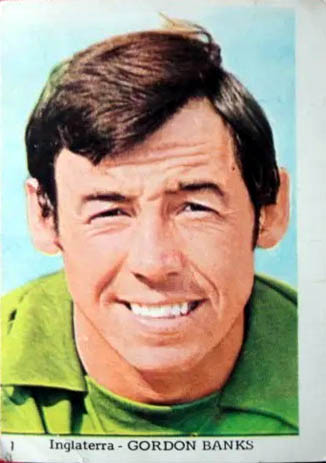
- Gordon Banks, England's goalkeeper in the 1966 World Cup win, had kidney cancer and died in 2019 at 81.
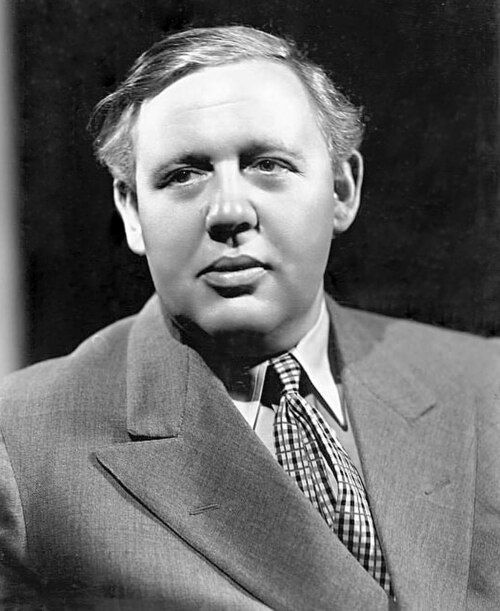
- Charles Laughton, the Oscar-winning actor, died in 1962 at 63; his death is usually attributed to renal and bladder cancer.
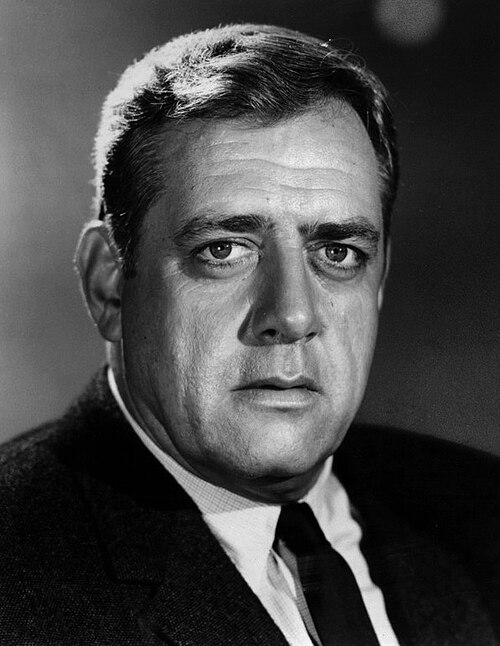
- Raymond Burr, television's Perry Mason, died in 1993 at 76. The list records kidney cancer; his death is usually described as liver cancer that had spread from a kidney tumor removed earlier that year.
Among the notable people on this list, the median age at death was 67.5, and all of them were men. Newley's story shows a pattern the statistics describe: survival is long when the cancer is confined to the kidney, and much shorter once it spreads.
The usual cautions apply. Notable people are not a representative sample, and with a list this short, a single name moves the numbers. Causes of death come from Wikidata and can be loose, as Burr's record shows. Several of these deaths date from decades ago, before many kidney cancers were found early on scans done for other reasons. Nothing here suggests any person's habits caused their illness.
The short version
Kidney cancer is common enough to rank in the US top 10 and is about twice as common in men. The clearest levers are not smoking, keeping a healthy weight and limiting exposure to chemicals such as trichloroethylene at work; high blood pressure is also linked, though the reason is unclear. Family history and rare inherited syndromes raise risk, and people with those may be offered regular checks. There is no screening for everyone else, but many cases are found early on scans done for other reasons, and early cases have high survival. Blood in the urine or lasting pain in the side or back is the reason to see a doctor.
Sources
- American Cancer Society: Key Statistics About Kidney Cancer - US cases and deaths, age, sex, lifetime risk, detection trend.
- American Cancer Society: What Is Kidney Cancer? - types and their shares; living with one kidney.
- American Cancer Society: Kidney Cancer Risk Factors - smoking, weight, blood pressure, family history, syndromes, chemicals, painkillers.
- American Cancer Society: Can Kidney Cancer Be Prevented? - three prevention steps.
- American Cancer Society: Can Kidney Cancer Be Found Early? - no average-risk screening; high-risk checks; incidental findings.
- National Cancer Institute SEER: Cancer Stat Facts, Kidney and Renal Pelvis Cancer - survival by stage, median ages, incidence and death trends.
- National Cancer Institute: Obesity and Cancer - kidney cancer among 13 obesity-associated cancers.
- National Cancer Institute: Renal Cell Cancer Treatment (PDQ), Patient Version - risk factors including pain medicine misuse.
- CDC: Kidney Cancer Basics - types, risk factors, blood pressure uncertainty, ways to lower risk, symptoms.
- CDC MMWR: Surveillance for Cancers Associated with Tobacco Use, United States, 2010-2014 - kidney cancer as tobacco-caused; relative risk range.
- IARC: Quitting smoking after being diagnosed with kidney cancer lowers the risks of cancer progression and mortality - quitting after diagnosis.
- NHS: Causes of kidney cancer - risk factors and ways to lower risk.
- NHS: Symptoms of kidney cancer - symptoms and when to get help.
- National Kidney Foundation: Kidney Cancer - smoking dose, weight and hormones, Wilms tumor, most common sign.
How this was sourced
This page summarizes what public health authorities and cancer research bodies say, with a link at each claim to the page it came from. We cut any claim we could not trace to one of those pages. It is not medical advice and cannot assess anyone's personal risk; talk to a doctor about your own health and any symptoms that worry you.