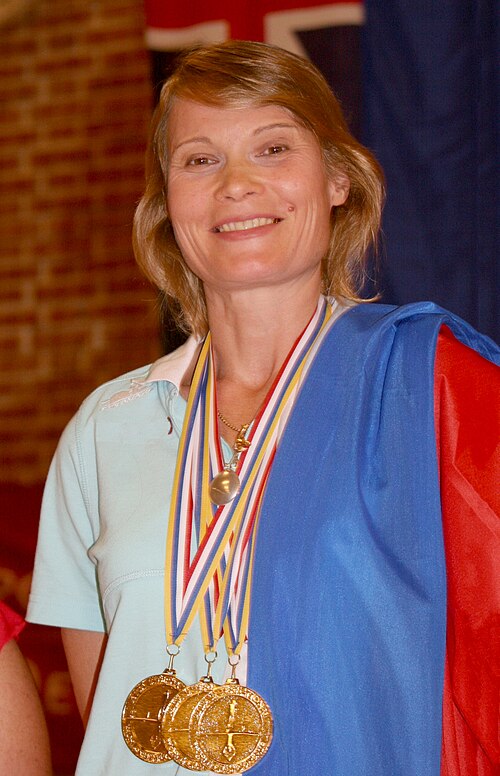
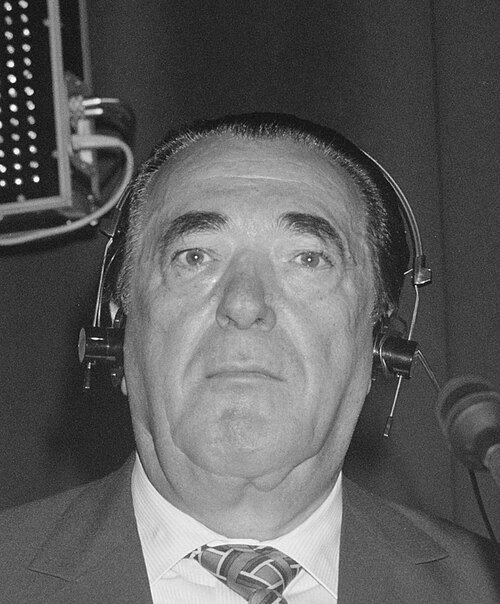
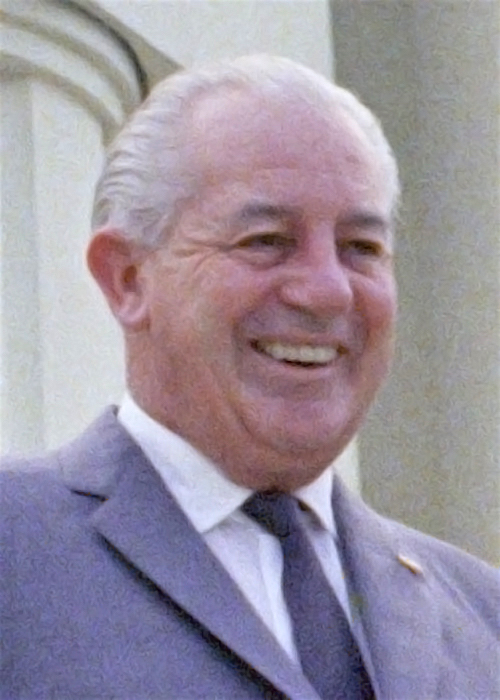
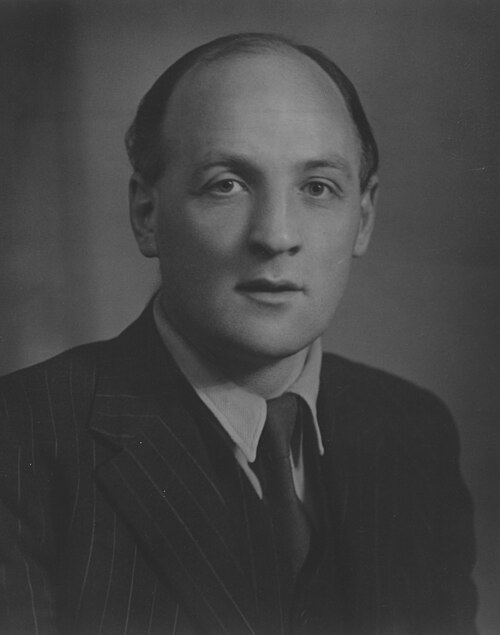
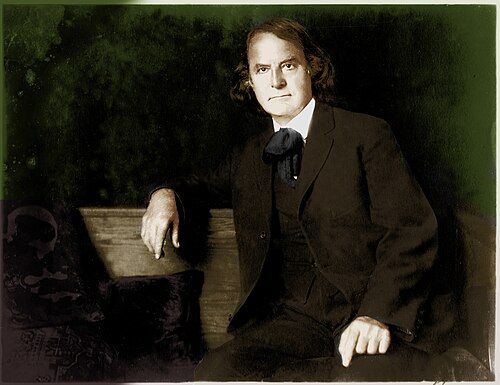
Drowning is breathing failure caused by being under, or immersed in, water or another liquid. It kills far more people than most realize: the World Health Organization counts around 300,000 drowning deaths worldwide each year, and says 92% of them happen in low- and middle-income countries. In the United States, the CDC estimates about 4,000 fatal unintentional drownings a year, or 11 a day, plus about 8,000 nonfatal drownings a year that end in an emergency department.
In the general population, drowning is above all a danger to small children. The CDC says more children aged 1 to 4 die from drowning than from any other cause. The list above looks different: the median age at death among the notable people on it is 54, and most of them are men. That reflects who becomes famous, adults with long careers, more than it reflects who is most at risk, although the male tilt does match the wider picture.
What is drowning?
A review on the NIH's NCBI Bookshelf describes drowning as a process of breathing impairment from submersion or immersion in liquid. It usually begins with panic, which disrupts normal breathing and sets off a struggle to stay at the surface. When water reaches the airway, the throat can spasm shut and water is drawn into the lungs. Either way, the body runs short of oxygen.
The timeline is short. The same review says most people lose consciousness within 2 minutes, and lasting brain injury typically sets in within 4 to 6 minutes. How long someone stays under is the single strongest predictor of survival, with death rates rising sharply once submersion passes 5 minutes. Drowning is not always fatal: the review estimates that for every drowning death, 4 nonfatal cases need medical care, and some survivors, especially children, are left with brain injury.
Which risk factors can't be changed?
Age
Young children face the highest risk. The WHO says children under 5 account for nearly a quarter of drowning deaths worldwide, and that drowning ranks as the fourth leading cause of death at ages 1 to 4 and the third at ages 5 to 14. In the US, the CDC reports that drowning is the second leading cause of unintentional injury death for children 5 to 14, after motor vehicle crashes.
Where people drown shifts with age. The CDC says that among babies under 1, three quarters of drownings happen in bathtubs, while almost half of fatal drownings in people 15 and older happen in natural water such as lakes, rivers and the sea.
Sex
Men drown far more often than women. The CDC says nearly 80% of people who die from drowning in the US are male, and the WHO puts the global male death rate at more than twice the female rate. Our list follows the same pattern, with 16 men and 7 women.
Medical conditions
Some health conditions make a loss of control in water more likely. The CDC notes that people with seizure disorders are at higher risk of both fatal and nonfatal drowning. A 2022 systematic review of 83 studies on adult drowning found that epilepsy raised the relative risk of drowning by 3.8 to 82 times across the studies it examined, and that heart rhythm problems were the most often reported heart condition, found in 22.9% of unexplained drowning deaths referred for a molecular autopsy in one US study. Children with autism are also at higher risk: the CDC says deaths among people with autism spectrum disorder are nearly 40 times as likely to be caused by drowning as deaths in the general population.
Where a person lives
Daily life near open water raises exposure. The WHO points to ponds, rivers and open wells used for bathing, washing and fetching water in poorer countries, to unsafe and overcrowded boats, and to floods, noting that drowning causes 75% of deaths in flood disasters. Work on the water carries its own toll: the WHO cites a UN Food and Agriculture Organization estimate of more than 32,000 fishers dying on the job each year.
Which circumstances can be changed?
For an injury like drowning, the useful levers are less about the body and more about the setting: who is watching, what stands between a child and the water, what a person has had to drink, and what they are wearing.
Alcohol
Among teenagers and adults, alcohol is the biggest single factor in the sources. The CDC says alcohol is involved in up to 70% of deaths linked to water recreation, in nearly 1 in 4 emergency visits for drowning, and in about 1 in 5 reported boating deaths. The NCBI review puts alcohol in more than 50% of adult drowning cases. Studies cited by the WHO suggest that men's higher drowning rates reflect more exposure to water and riskier behavior, such as drinking alcohol before swimming alone. The CDC advises avoiding alcohol before or during swimming, boating and other water activities.
Supervision of children
Young children can drown in moments and in very little water. The NHS warns that babies can drown in as little as 5cm (2 inches) of water and that baths are among the most common places for small children to drown. It advises staying with a baby or toddler for the whole bath, even when an older sibling is in the tub, and emptying the bath straight after. The NCBI review notes that most infant drowning deaths occur within 5 minutes of being left unsupervised.
The CDC recommends that a named adult watch children closely and constantly in or near water, bathtubs included, and that the adult avoid distractions while doing it. The WHO counts supervised community daycare for preschool children among its core prevention measures, and estimates that scaling up daycare and basic swimming could prevent 774,000 child drownings by 2050.
Barriers and pool fencing
Putting something physical between a toddler and the water works without anyone needing to watch. The CDC reports that a four-sided isolation fence, which separates the pool from the house and yard, cuts a child's drowning risk by 83% compared with fencing only the property line. It recommends a fence at least four feet high with self-closing, self-latching gates. For garden ponds, the NHS suggests fencing them off, filling them in or covering them securely. The WHO also lists covered wells, doorway barriers and playpens as ways to keep small children away from water.
Swimming ability
The CDC says many adults and children report that they cannot swim or are weak swimmers, and that formal lessons can lower drowning risk in children and young adults. A 2009 case-control study in Archives of Pediatrics and Adolescent Medicine, found that among children aged 1 to 4, formal swimming lessons were linked to an 88% lower risk of drowning. The authors were cautious: the estimate was imprecise, with a range running from 3% to 99%, and they presented lessons as one layer alongside fencing, supervision and CPR training. The WHO recommends teaching school-age children basic swimming, water safety and safe rescue skills.
Life jackets
On boats, the life jacket is the clearest lever. The CDC cites US Coast Guard figures for 2021: of 658 boating-related deaths, 81% were drownings, and 83% of those who drowned were not wearing a life jacket. The CDC says life jackets reduce the risk of drowning while boating for people of all ages and swimming abilities, and recommends them for children in and around natural water and for weaker swimmers in both natural water and pools.
Choice of water
Open water is less forgiving than a pool, with currents, cold, depth and distance from help. The CDC's figures show that over 40% of drownings among children 5 to 14 occur in natural water. MedlinePlus lists trying to swim too far, panic and not wearing a life jacket among the common causes of drowning incidents.
What does not cause drowning, and what are the myths?
"Someone drowning will splash and shout"
Usually not. The NHS says drowning is often silent, with no noise or struggle to hear. MedlinePlus notes that a drowning person usually can't shout for help, and the NCBI review describes the typical case as a motionless person at the surface who then slips quickly under.
"Dry drowning" and "secondary drowning"
These phrases circulate widely online, often in stories about a child who seemed fine after a swim. The NCBI review says the terms "wet drowning," "dry drowning" and "near-drowning" are no longer accepted in medicine. What is real is that a person who inhaled water can have lung problems afterward, which is why MedlinePlus says everyone who has had a nonfatal drowning should be checked by a health care provider.
"A child who can swim is safe"
Lessons help, but they do not replace watching. The CDC says children who have had swimming lessons still need close supervision, and the authors of the 2009 lessons study noted that many children who drowned, particularly older ones, were already fairly skilled swimmers.
"A bath seat keeps a baby safe"
The NHS is direct on this: a bath seat is not a safety device, and an adult still has to stay with the baby the whole time.
Can it be caught early?
There is no screening test for drowning risk. The nearest thing is spotting trouble in the water early, which is the subject of the next section.
What does drowning look like, and what are the warning signs?
Drowning rarely looks like the movies. A 2021 review in the Medico-Legal Journal summarizes the classic description, known as the instinctive drowning response: no calling or waving for help, the mouth and nose repeatedly dipping under, the body upright, and the arms moving sideways just below the surface. That early observational work suggested a person can struggle at the surface for only 20 to 60 seconds before going under, and the review's authors conclude the visible phase is unlikely to last much longer than 60 to 90 seconds. They also note that the shift from swimming to struggling is subtle and often missed.
Based on these descriptions, signs in the water worth acting on:
- A swimmer who has gone quiet, with the mouth and nose bobbing at the waterline.
- An upright body in the water, with the arms moving sideways just under the surface instead of swimming forward.
- A person floating still at the surface, who may then slip under.
After someone is pulled out, MedlinePlus lists signs of a nonfatal drowning: bluish skin, especially at the lips, cold and pale skin, a cough with pink, frothy sputum, confusion, vomiting, and shallow or gasping breathing, or no breathing at all.
MedlinePlus first aid guidance stresses not becoming a second victim: reach with a pole or branch, or throw a rope tied to something that floats, rather than swimming out untrained. If the person is not breathing, MedlinePlus advises starting rescue breathing as soon as possible, and CPR once on land if there is no pulse. The CDC encourages people to learn CPR, because it can keep someone alive until paramedics arrive. MedlinePlus says anyone who needed any resuscitation, even only rescue breaths, needs hospital care even if they seem fine.
Call 911 (US), 999 (UK) or 112 (EU) at once.
What do the famous cases show?
Several of the best-known names on the list drowned in lakes, rivers or the sea.
- Jeff Buckley, the singer-songwriter behind the album Grace, died in 1997 at 30 after going swimming in a channel of the Mississippi River in Memphis. His death was ruled an accidental drowning.
- Natalie Wood, the actress of Rebel Without a Cause, died in 1981 at 43 in the Pacific Ocean near Santa Catalina Island. Her cause of death was later amended to drowning and other undetermined factors.
- Naya Rivera, of the TV series Glee, died in 2020 at 33 while swimming from a rented boat on Lake Piru in California with her young son, who was found safe on the boat wearing a life jacket.
- Malcolm-Jamal Warner, of The Cosby Show, died in 2025 at 54 after being caught in a strong current off a beach in Costa Rica.
The median age at death among the notable people on this list is 54, and the youngest was 24. Men outnumber women 16 to 7, close to the sex split the CDC and WHO report for drowning overall. The age profile, though, is far older than the general picture, in which small children are the group most at risk; children rarely appear on a list of notable people.
A plain caveat applies. Notable people are not a representative sample. Causes of death here come from Wikidata and can be incomplete or loose, so a drowning may be recorded where other factors played a part. And the list reaches back centuries, to a death in 1611, when boats, rescue and medical care were nothing like today's.
The short version
- Small children are at greatest risk, and they drown quickly and quietly, often in bathtubs and pools. The CDC recommends close, constant and undistracted adult supervision.
- A four-sided fence with a self-latching gate is linked by the CDC to an 83% drop in a child's pool drowning risk.
- For teens and adults, alcohol is the standout factor; the CDC ties it to up to 70% of water-recreation deaths.
- Most people who drown while boating are not wearing a life jacket.
- Swimming lessons help but do not make anyone drown-proof, and knowing CPR buys time until help arrives.
Sources
- World Health Organization: Drowning fact sheet - global deaths, age and sex patterns, risk settings and prevention measures.
- CDC: Drowning Data - US yearly deaths and nonfatal drownings, leading cause of death at ages 1 to 4.
- CDC: Risk Factors for Drowning - age, sex, alcohol, fencing, life jackets, seizure disorders and autism.
- CDC: Preventing Drowning - supervision, fences, life jackets, CPR and alcohol advice.
- NIH NCBI Bookshelf (StatPearls): Drowning: Prevention, Evaluation, and Management - mechanism, timeline, alcohol share, outdated terms.
- MedlinePlus: Non-fatal drowning - symptoms, first aid, and the need for medical checks afterward.
- Medico-Legal Journal (PMC): The experience of drowning - the instinctive drowning response and how long it lasts.
- Archives of Pediatrics and Adolescent Medicine (PMC): Association Between Swimming Lessons and Drowning in Childhood - formal lessons and drowning risk in young children.
- International Journal of Environmental Research and Public Health (PMC): Pre-Existing Medical Conditions and Adult Drowning - epilepsy and heart rhythm problems.
- NHS: Baby and toddler safety - bath safety, shallow water, ponds, and silent drowning.
How this was sourced
This article summarizes public health authorities and peer-reviewed research, each linked at the claim it supports. We checked the famous cases against their public biographies and used our own data only for the age and sex figures about the list. It is not medical advice; talk to a doctor about your own risk or that of someone in your care.