AIDS is the most advanced stage of infection with HIV, a virus that attacks the immune system. Over four decades it has been one of the deadliest epidemics in modern history: the World Health Organization estimates that HIV has claimed about 44.2 million lives, and that 570,000 people died from HIV-related causes in 2025.
The picture today is very different from the one the list above records. The notable people on it all died between the mid-1980s and the mid-1990s, at a median age of 41, and none after 2000. They died before effective combination treatment existed or was widely available. Today, the CDC says, people with HIV who start and stay on treatment can live long, healthy lives and protect their partners. This page covers how HIV is passed on, how it is prevented and tested for now, and why the deaths on this list mostly belong to an earlier era.
What are HIV and AIDS?
HIV stands for human immunodeficiency virus. The CDC describes it as a virus that attacks the body's immune system.
AIDS, or acquired immunodeficiency syndrome, is the end stage. The CDC says a person receives an AIDS diagnosis when their CD4 count drops below 200 cells per milliliter of blood, or when certain serious illnesses develop. The NHS describes AIDS as a collection of serious illnesses caused by HIV and notes it is now often called late-stage or advanced HIV.
Timing is the key fact. The CDC says that without treatment, people with AIDS typically survive about three years. There is still no cure for HIV infection, the WHO says, but treatment turns it into a manageable long-term condition.
Why did so many die in the 1980s and 1990s?
The first US report came in June 1981, when the CDC described five young men in Los Angeles treated for a rare pneumonia between October 1980 and May 1981. Until effective treatment arrived, an AIDS diagnosis carried the outlook the CDC still gives for people without treatment: survival of about three years.
That changed in the mid-1990s with combination antiretroviral therapy, known then as HAART. A 2002 CDC report found that the estimated number of deaths among people with AIDS in the US fell 42% from 1996 to 1997, and it linked the decline primarily with the widespread use of HAART. The people on the list above died almost entirely on the far side of that line.
Who is most affected?
HIV can affect anyone. Some groups carry more of the burden because of how the virus spreads and where it has taken hold, not because of who they are.
Where people live
The WHO estimates that 41.0 million people were living with HIV at the end of 2025, 64% of them in the WHO African Region. In the United States, the CDC estimates about 1.2 million people had HIV in 2022.
Gay, bisexual and other men who have sex with men
In the US, the CDC reports that this group accounted for 67% of estimated new infections in 2022, with Black and Hispanic/Latino men making up the largest share of diagnoses within it.
Birth to a mother with HIV
The WHO notes that HIV can pass from mother to child, and the USPSTF recommends that clinicians screen all pregnant people for HIV, including those whose status is unknown when they arrive in labor.
Which risk factors can be changed?
HIV passes only through certain body fluids. The CDC says most people get HIV through anal or vaginal sex, or by sharing needles, syringes or other injection equipment. The WHO lists the fluids as blood, breast milk, semen and vaginal fluids. Every prevention tool targets one of those routes.
Condoms
The CDC says most condoms are highly effective in preventing HIV and other STIs when used correctly every time.
PrEP: medicine taken before exposure
Pre-exposure prophylaxis, or PrEP, is HIV medicine that people without HIV take to stay negative. The CDC says that, taken as prescribed, both oral and injectable PrEP reduce the risk of getting HIV from sex by about 99%, and oral PrEP has been shown to reduce the risk from injection drug use by at least 74%. It comes as daily pills or shots, for example an injection given every 2 months.
Protection takes time to build. For daily pills, the CDC says it peaks after about 7 days for receptive anal sex and about 21 days for receptive vaginal sex and injection drug use. The US Preventive Services Task Force gives PrEP its top grade, A, and recommends it for adolescents and adults at increased risk of HIV. The NHS says PrEP is available free on the NHS from sexual health clinics.
PEP: medicine taken after exposure
Post-exposure prophylaxis is an emergency course of HIV medicine. The NHS says it is for people who think they have been exposed to HIV in the last 72 hours, and it is available from sexual health clinics and A&E. The CDC gives the same 72-hour window and advises talking to a health care provider right away.
Not sharing injection equipment
The CDC lists never sharing needles or other drug injection equipment among the main ways to lower risk.
Treatment as prevention: undetectable means untransmittable
This is the biggest change since the era of the list above. HIV treatment lowers the amount of virus in the blood, and when it is so low a test cannot detect it, the virus is not passed on through sex. The CDC states that people with HIV who take their medicine and keep an undetectable viral load will not transmit HIV to their sex partners. The WHO says the same: people on treatment with an undetectable viral load will not transmit HIV to their sexual partners. The NHS puts it as cannot pass the virus on. This is often shortened to U=U, undetectable equals untransmittable.
The CDC advises starting treatment as soon as possible after diagnosis, and says most people can get HIV under control within six months. Treatment protects the person taking it as well as their partners.
What does not spread HIV?
The health agencies are clear about everyday contact.
- Kissing, hugging and touching. The CDC says HIV is not transmitted through saliva, and that it cannot be passed on through closed-mouth kissing or through activities that do not involve contact with body fluids, such as touching. The WHO says it is not spread by kisses, hugs or sharing food.
- Shaking hands, toilet seats and shared household items. Per the NHS, HIV cannot be passed on by kissing, hugging or shaking hands, and also lists toilet seats, food, drinks and household items as safe.
- Food and surfaces. The CDC says HIV does not survive long outside the human body, and that a person cannot get HIV from food handled by someone with HIV.
- "A diagnosis is a death sentence." That was close to true when the people on this list fell ill. It is not now: with treatment, the NHS says, most people with HIV can live a long and healthy life.
Can it be caught early?
Yes, and testing is where prevention and treatment start. The CDC recommends that everyone between the ages of 13 and 64 get tested for HIV at least once, and that people with certain risk factors test more often, at least once a year. The USPSTF gives an A grade to screening adolescents and adults aged 15 to 65, plus younger and older people at increased risk.
Many people still do not know. The CDC estimates that in the US, 87 of every 100 people with HIV knew their status in 2022. Worldwide, the WHO says 88% of people living with HIV knew their status in 2025.
No test works the moment after exposure. The CDC says antibody tests usually detect HIV 23 to 90 days after exposure, while nucleic acid tests can pick it up in roughly 10 to 33 days. Self-tests give results within 20 minutes, and a positive result needs a lab test to confirm it. The WHO notes that rapid tests can give same-day results.
When should someone see a doctor?
The health agencies' advice centers on testing rather than symptoms. Anyone who may have been exposed in the past 72 hours should seek PEP at once from a sexual health clinic or emergency department, per the NHS. For exposure longer ago than that, the NHS says a GP or sexual health clinic can test, and the CDC's advice to test at least once, and more often for people at higher risk, applies to everyone else.
What do the famous cases show?
Every person on this list died before 2000, most of them before combination treatment arrived.
- Ryan White was a teenager with hemophilia who acquired HIV from a contaminated blood product. Diagnosed with AIDS in December 1984 and given six months to live, he was barred from school, became a national voice against stigma, and died in 1990 at 18. Congress passed the Ryan White CARE Act shortly after his death.
- Robert Mapplethorpe, the photographer, kept working until he died of AIDS-related complications in 1989 at 42.
- Alvin Ailey, who founded the Alvin Ailey American Dance Theater, died of an AIDS-related illness in 1989 at 58.
- Howard Ashman, lyricist of The Little Mermaid and Beauty and the Beast, died of AIDS complications in 1991 at 40.
- Derek Jarman, the British filmmaker, was one of the first public figures in Britain to disclose that he was living with HIV. He died of an AIDS-related illness in 1994 at 52, months after releasing his last feature film, Blue.
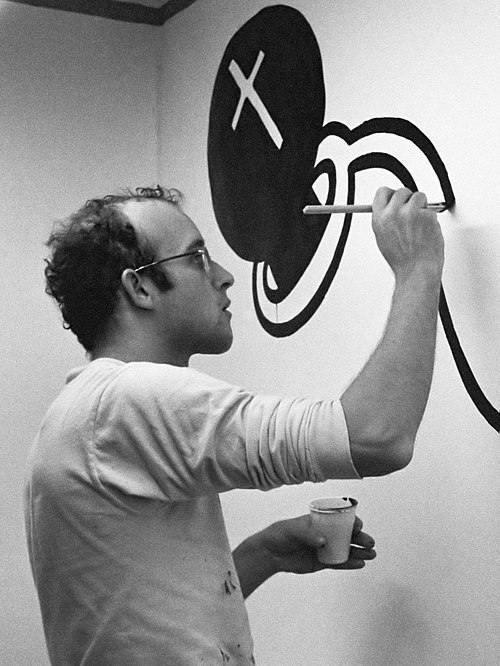
Among the notable people on this list, the median age at death was 41, with the middle half dying between about 38 and 53. All were men, and none died after 2000. One record needs a note: our data gives Keith Haring's death as 1989 at 30, while his Wikipedia biography says he died in February 1990, aged 31.
A caveat applies. Notable people are not a representative sample, causes of death come from Wikidata and can be incomplete, and many people who died of AIDS in that era were not publicly recorded as such. Above all, history matters: these deaths reflect a time before effective treatment, and say little about the outlook for someone diagnosed and treated today.
The short version
- HIV is passed on through sex, shared injection equipment, and from mother to child, not through kissing, hugging, touch or food.
- Testing at least once is recommended for everyone aged 13 to 64 in the US, and more often for people at higher risk.
- PrEP, taken as prescribed, cuts the risk of getting HIV from sex by about 99%, and PEP within 72 hours can prevent infection after an exposure.
- Treatment started early lets people with HIV live long lives, and an undetectable viral load means HIV is not passed on through sex.
- The deaths on this list mostly came before 1996, when combination therapy changed the course of the disease.
Sources
- WHO: HIV and AIDS fact sheet - global deaths, people living with HIV, regional share, transmission, no cure, U=U, testing.
- CDC: About HIV - what HIV and AIDS are, survival without treatment, ways to lower risk.
- CDC: How HIV Spreads - routes of transmission and what does not spread HIV.
- CDC: Preventing HIV - condoms, PEP, undetectable viral load.
- CDC: Preventing HIV with PrEP - who PrEP is for and time to protection.
- CDC: Clinical Guidance for PrEP - PrEP effectiveness and forms.
- CDC: Getting Tested for HIV - who should test, test types, window periods, self-tests.
- CDC: Treating HIV - start treatment early, time to viral suppression.
- CDC: Fast Facts: HIV in the United States - US prevalence, new infections, awareness of status.
- CDC MMWR: Pneumocystis Pneumonia, Los Angeles (1981) - the first US report.
- CDC MMWR: Update: AIDS, United States, 2000 - decline in AIDS deaths after HAART.
- NHS: HIV and AIDS - AIDS as late-stage HIV, PrEP and PEP in the UK, what does not spread HIV, outlook with treatment.
- USPSTF: HIV Infection Screening - screening ages 15 to 65 and in pregnancy.
- USPSTF: Prevention of HIV Infection, Preexposure Prophylaxis - grade A recommendation for PrEP.
How this was sourced
This article summarizes public health authorities and peer-reviewed research, each linked at the claim it supports. We do not add medical claims of our own, and the famous cases are drawn from public records of how each person died. It is not medical advice. Talk to a doctor or a sexual health clinic about testing, PrEP or your own risk.