1973Jan 22
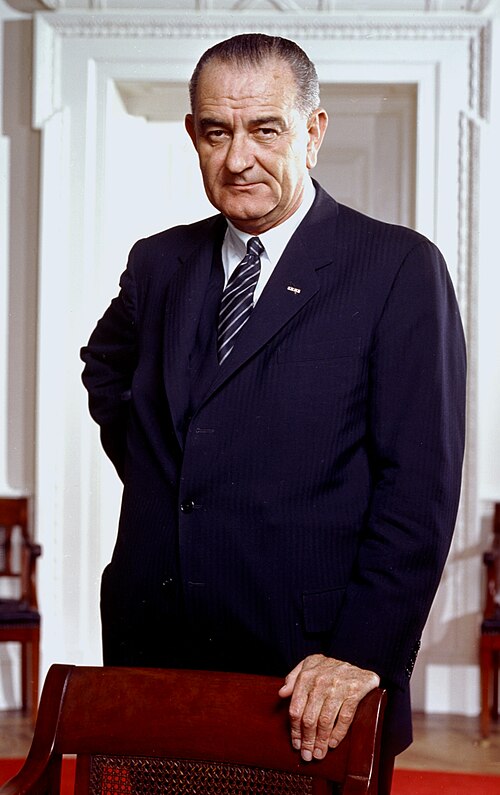
Lyndon Johnson
36th President of the United States Born 27 Aug 1908 - Died 22 Jan 1973 Stonewall 1 recorded health event
Lyndon B. Johnson was a Texas Democrat and the 36th U.S. president, who took office in 1963 after the assassination of John F. Kennedy and served until 1969. Known as LBJ, he was born Lyndon Baines Johnson on August 27, 1908, in a farmhouse beside the Pedernales River close to Stonewall, Texas, the eldest of five children.
Johnson taught school and worked as an aide in Congress, then won a House seat in 1937. He won a disputed Democratic Senate primary in Texas in 1948 and then the Senate seat itself, and he became Senate majority whip in 1951, party leader in 1953 and majority leader a year later. After losing the 1960 presidential nomination to Kennedy, he joined the ticket as vice president. He won the 1964 election in a landslide with the largest share of the popular vote any Democrat had ever received. Under the Great Society banner he signed the Civil Rights Act of 1964, then in 1965 the Voting Rights Act, the Higher Education Act and the Social Security Amendments that set up Medicare and Medicaid; a further civil rights law followed in 1968. Abroad, he greatly expanded U.S. involvement in the Vietnam War.
Johnson's approval fell as the public grew frustrated with the war, race riots and rising crime. After disappointing results in the 1968 New Hampshire primary he dropped his bid for another term, and he retired to his Texas ranch, where he kept a low profile. He suffered a fatal heart attack at the ranch on January 22, 1973, and was pronounced dead on arrival at San Antonio International Airport while being flown for treatment. He was 64.
Health Timeline
Newest first - 1 eventAbout this record
Each event is compiled from published reporting and rated for severity by an automated classifier, then shown with its date. Only events concerning Lyndon Johnson's own health are included. Biographical summary adapted from Wikipedia (source linked above).
1 health event - 0 articles tracked