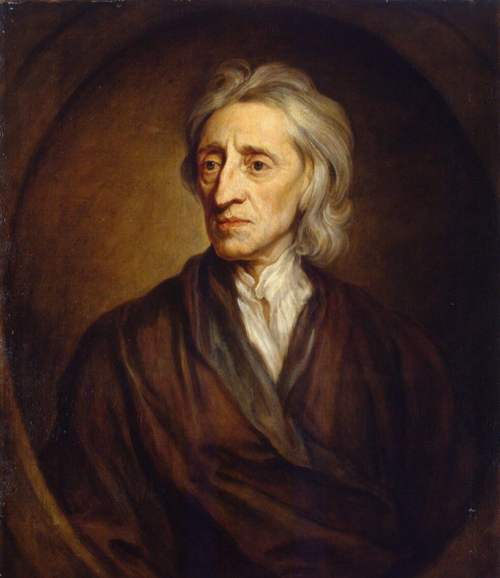
John Locke
John Locke was an English philosopher and physician, widely regarded as one of the most influential of the Enlightenment thinkers and commonly known as the "father of liberalism". His important works include A Letter Concerning Toleration and Two Treatises of Government, both published anonymously, and An Essay Concerning Human Understanding. Locke's writing on toleration contends that religion is a matter for the individual and that the churches are voluntary associations, ruling out religious coercion and uniformity, and his Two Treatises on Government argues for government based on the consent of the governed and the right to revolt against tyrannous government. Locke's experiences during the tumultuous political era of the English Civil War and Commonwealth of England affected his political thinking and life choices, and he was influenced by his association with Lord Shaftesbury and his time in exile in the Netherlands. Considered one of the first of the British empiricists, Locke's work greatly affected the development of epistemology and political philosophy, and his writings influenced many notable thinkers, including Voltaire, Jean-Jacques Rousseau, and the American Revolutionaries. His contributions to classical republicanism and liberal theory are reflected in the United States Declaration of Independence, and his philosophy of mind is often cited as the origin of modern conceptions of personal identity and the psychology of self.
Health Timeline
Newest first - 0 eventsNo health events recorded for John Locke yet. This page updates as coverage is verified.
About this record
Each event is compiled from published reporting and rated for severity by an automated classifier, then shown with its date. Only events concerning John Locke's own health are included. Biographical summary adapted from Wikipedia (source linked above).
0 health events - 0 articles tracked