1980Apr 29
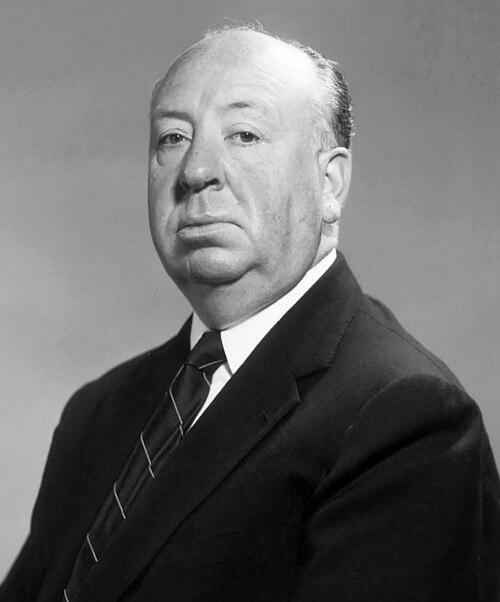
Alfred Hitchcock
English film director, a U.S. citizen since 1955, Master's taut thriller Born 13 Aug 1899 - Died 29 Apr 1980 Leytonstone 1 recorded health event
Alfred Hitchcock was an English film director, known as the "Master of Suspense", who made more than 50 feature films over six decades in Britain and Hollywood. He was born Alfred Joseph Hitchcock on August 13, 1899, in a flat above his parents' greengrocer's shop on the High Road in Leytonstone, then part of Essex. He worked as a technical clerk and copywriter before joining the film business in 1919 as a designer of title cards.
His first film as director was The Pleasure Garden (1926), a British and German silent. The Lodger (1927) helped define the thriller, and Blackmail (1929) was the first British talking picture. The 39 Steps (1935) and then The Lady Vanishes (1938) followed before producer David O. Selznick brought him to Hollywood, where Rebecca (1940) won the Academy Award for Best Picture. He received Best Director nominations for Rebecca, Lifeboat (1944), for Spellbound (1945), Rear Window (1954) and then Psycho (1960) but never won the award. From 1955 to 1965 he hosted and produced the television series Alfred Hitchcock Presents, and in 2012 his Vertigo replaced Citizen Kane at the top of the British Film Institute's critics' poll.
Hitchcock turned down a CBE in 1962 but was made a Knight Commander of the Order of the British Empire in the 1980 New Year Honours. By then he had a pacemaker and was too ill to travel, so the British consul general handed him the papers at Universal Studios on January 3, 1980. He was working on a spy script, The Short Night, which was never filmed. Hitchcock died of kidney failure at his home in Bel Air on April 29, 1980, at the age of 80.
Health Timeline
Newest first - 1 eventAbout this record
Each event is compiled from published reporting and rated for severity by an automated classifier, then shown with its date. Only events concerning Alfred Hitchcock's own health are included. Biographical summary adapted from Wikipedia (source linked above).
1 health event - 0 articles tracked